









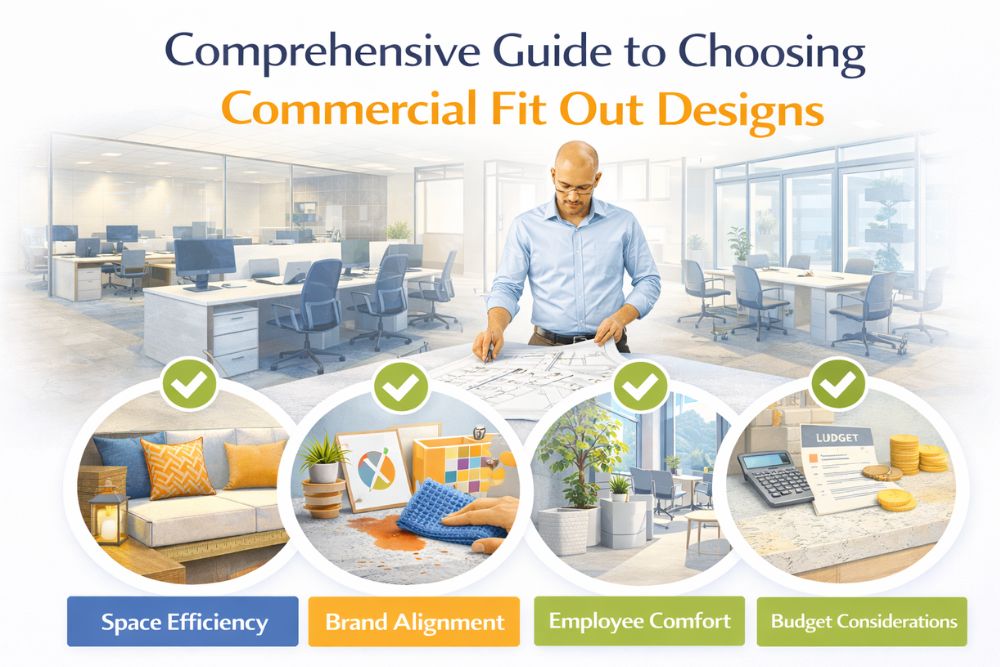
Ever wondered what goes into transforming an empty shell into a thriving workplace? Are you planning an office renovation but feeling overwhelmed by the sheer number of decisions ahead? Perhaps you’re asking yourself whether your current workspace truly supports your team’s productivity and wellbeing? If these questions sound familiar, you’re in the right place. A commercial fit out can completely transform how your business operates, but getting it right requires careful planning, the right partners, and a solid understanding of what’s involved. Whether you’re moving into a new premises or breathing fresh life into your existing space, this guide will walk you through everything you need to know.
In this office fit out guide, we’ll explore the different types of property fit out projects, help you create a bulletproof project plan for office fit out success, break down the costs involved, and share insider tips on how to choose a building contractor who’ll deliver results. Let’s get stuck into it.
What Does Commercial Fit Out Mean?
Fitout or Fit Out Australia: Understanding the Terminology
First things first—let’s clear up some confusion around terminology. You’ve probably seen both “fitout” and “fit out” used interchangeably across Australian websites and documents. The commercial fit out meaning refers to the process of making an interior space suitable for occupation. This includes everything from installing partitions and ceilings to electrical work, flooring, and furniture.
In Australia, both spellings are commonly accepted, though “fit out” (two words) tends to be more prevalent in formal documentation. What matters most isn’t the spelling—it’s understanding that this process transforms a basic building shell into a functional, branded workspace that reflects your company’s values and supports your team’s daily activities.
Why Getting Your Commercial Fit Out Right Matters
A well-executed commercial fit out does more than just make your office look good. It directly impacts employee productivity, client perceptions, and even your bottom line. Studies consistently show that thoughtfully designed workspaces boost morale and reduce staff turnover.
Think about it—your team spends roughly eight hours daily in this environment. Shouldn’t it inspire their best work? Plus, a professional fit out signals credibility to clients and partners who visit your premises. Getting this right from the start saves you money, time, and headaches down the track.
Types of Commercial Fit Out Projects
Property Fit Out Categories Explained
Not all property fit out projects are created equal. The scope of your project depends largely on the condition of your space when you take possession. Understanding these categories helps you budget accurately and set realistic expectations.
Commercial fit outs typically fall into several categories based on complexity and scale. Some involve starting from scratch in a completely bare space, while others focus on refreshing an existing layout. Your lease agreement will often specify what condition you’ll receive the space in and what you’re responsible for installing.
Shell and Core vs Ready for Fit Out Spaces
A shell and core space is essentially a blank canvas. You’ll receive the basic building structure—external walls, floors, and perhaps some fundamental services—but everything else is your responsibility. This option offers maximum flexibility but requires significant investment.
Alternatively, a ready for fit out space comes with basic infrastructure already installed. This might include raised floors, suspended ceilings, and basic mechanical and electrical services. This option reduces your initial outlay while still allowing customisation to suit your brand and operational needs.
Category A and Category B Fit Outs
Category A fit outs cover the fundamentals—think basic finishes, raised floors, suspended ceilings, and essential building services. This level makes the space functional but fairly generic. Most landlords complete Category A work before tenants move in.
Category B takes things further, adding your company’s personality to the space. This includes meeting rooms, branded reception areas, kitchen facilities, and specific layouts tailored to how your team works. This is where your workspace truly becomes yours.
Creating Your Office Fit Out Project Plan
Essential Components of an Office Fit Out Schedule
A solid office fit out project plan is your roadmap to success. Start by documenting your objectives—what do you want this space to achieve? Include detailed briefs for designers, budget allocations, and a comprehensive office fit out schedule with key milestones.
Your plan should also identify stakeholders and decision-makers. Nothing derails a project faster than unclear approval processes. Make sure everyone knows their responsibilities from day one.
Setting Realistic Timelines and Milestones
When building your project plan for office fit out delivery, be realistic about timeframes. Factor in design development, council approvals, contractor procurement, and the actual construction phase. Build in buffer time for unexpected delays—they happen more often than you’d think.
Key milestones typically include design sign-off, permit approvals, construction commencement, practical completion, and final handover. Track progress against these regularly to catch issues early.
How Long Does a Typical Commercial Fit Out Take?
Timing varies significantly based on project scope. A straightforward Category B fit out might take 8-12 weeks, while larger or more complex projects could extend to 20 weeks or beyond. Shell and core transformations naturally require more time.
The design phase alone can take 4-8 weeks, depending on how quickly decisions are made. Factor in 2-4 weeks for permits and approvals, then the actual construction period. Planning ahead gives you the best chance of meeting your move-in deadline.
Understanding Fit Out Work Procedures
The Step-by-Step Fit Out Process
Understanding fit out work procedures helps you know what to expect at each stage. The process typically begins with initial consultations and site assessments, followed by concept design development. Once designs are approved, detailed drawings and specifications are prepared for contractor pricing.
After contractor selection, construction begins. This involves demolition (if required), structural modifications, mechanical and electrical installation, plastering, painting, flooring, and finally, furniture installation. Each stage builds upon the previous one.
Key Stages from Design to Completion
The journey from concept to completion involves several critical phases. Design development refines your vision into practical plans. Documentation creates the detailed drawings contractors need. The tender process selects your construction partner.
Construction itself progresses through rough-in stages (hidden infrastructure), followed by finishing works that transform the space visually. Commissioning ensures all systems work correctly before handover. Finally, defect rectification addresses any snags identified during inspection.
How to Choose a Building Contractor
What Should You Look for in a Fit Out Contractor?
Knowing how to choose a building contractor can make or break your project. Look for demonstrated experience in commercial fit outs similar to yours. Check their portfolio—have they delivered projects of comparable size and complexity?
Financial stability matters too. A contractor going bust mid-project creates enormous headaches. Request references and actually call them. Ask about communication, problem-solving, and whether projects finished on time and budget.
Questions to Ask Before Signing a Contract
Before committing, ask potential contractors about their project management approach. Who will be your day-to-day contact? How do they handle variations and unexpected issues? What’s their track record with similar projects?
Request detailed breakdowns of their quotations. Understand exactly what’s included and excluded. Ask about their safety record and insurance coverage. Finally, clarify payment terms and milestone schedules.
Red Flags to Watch Out For
Be wary of quotes significantly lower than competitors—this often signals cut corners or hidden costs later. Poor communication during the tender phase usually indicates problems ahead. Reluctance to provide references should raise immediate concerns.
Watch for vague contract terms or resistance to putting agreements in writing. A reputable contractor welcomes transparency and clear documentation.
Budgeting and Accounting for Office Fit-Out Costs
How Much Does a Commercial Fit Out Cost in Australia?
Costs vary dramatically based on location, quality level, and scope. As a rough guide, basic fit outs might start around $800-1,200 per square metre, while premium finishes can exceed $2,500 per square metre. Sydney and Melbourne typically command higher prices than regional areas.
Breaking Down Your Fit Out Budget
Your budget should cover design fees, construction costs, furniture, technology infrastructure, and contingencies. Accounting for office fit-out costs properly means understanding how expenses will be treated—some may be immediately deductible while others require depreciation over time.
Don’t forget project management fees, building permits, and potential make-good obligations at lease end. A comprehensive budget prevents nasty surprises.
Design Considerations and Project Management
Balancing Aesthetics with Functionality
Great commercial spaces balance visual appeal with practical functionality. Consider traffic flow, acoustic privacy, natural light access, and flexibility for future changes. Your design should support how your team actually works, not just look impressive in photos.
Managing Your Office Fit Out Guide: Tips for Success
Common mistakes include underestimating timelines, inadequate contingency budgets, and poor communication between stakeholders. Keep your project on track by maintaining regular progress meetings, documenting all decisions, and addressing issues promptly rather than letting them snowball.
Making Your Commercial Fit Out a Success
Transforming your commercial space is a significant undertaking, but with the right knowledge, it’s entirely achievable. We’ve covered the commercial fit-out process, explored different project types, and walked through how to create your office fit-out project plan from start to finish.
If you’re planning a commercial fit out in melbourne, choosing an experienced local fit-out team can make a major difference to timelines, compliance and overall build quality.
Remember, success lies in thorough planning, choosing the right partners, and maintaining clear communication throughout the project. Your fit-out work procedures should be documented, your budget realistic, and your expectations clearly communicated to all involved parties.
Now it’s over to you. Take these insights, apply them to your specific situation, and create a workspace that truly supports your business goals. Whether you’re embarking on a shell-and-core transformation or a straightforward refresh, you’ve got this. Good luck with your project!