









A kitchen countertop has to do more than look attractive. I expect it to support meal preparation, cleaning, dining, storage, and everyday family activity. Therefore, choosing granite involves both design and practical planning. The supplier also matters because slab selection, measurement, fabrication, communication, and installation all influence the finished result. For homeowners in Milwaukee, taking time to compare the stone and the company behind it can make the entire project easier.
Begin With the Way the Kitchen Is Used
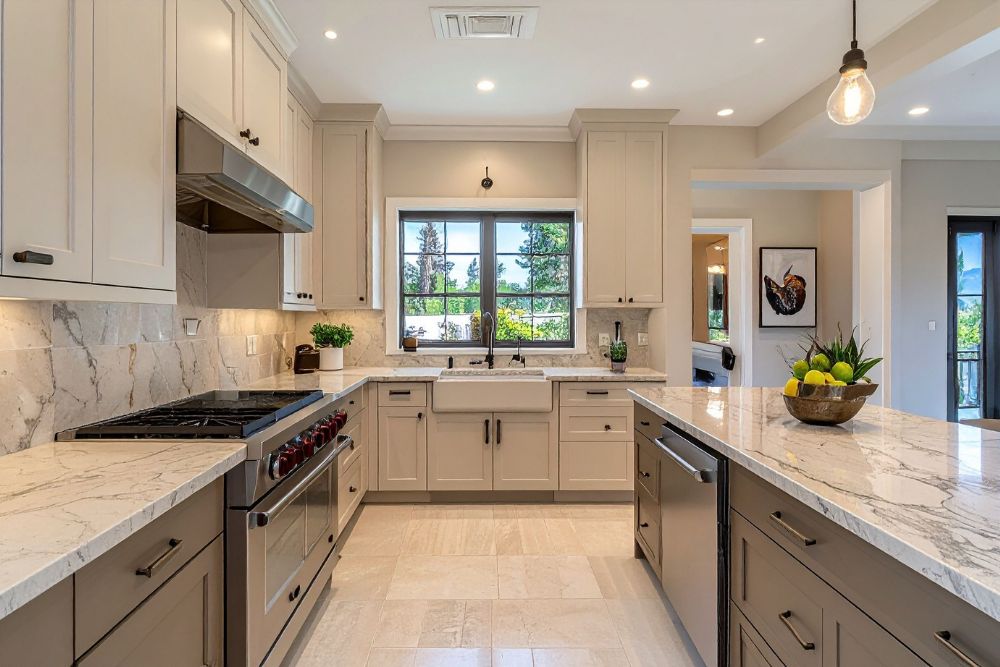
Before I select a granite slab, I think about how the kitchen works each day. A busy family kitchen may need large prep areas, while a smaller household may care more about appearance and easy cleaning. Therefore, the countertop should match the routine of the people who use it. When I evaluate kitchen granite countertops, I also look at cabinet color, flooring, backsplash tile, lighting, appliances, and room size. Granite contains natural movement, so the countertop can become either a quiet background or a strong focal point. As a result, I choose the slab as part of the complete kitchen design rather than as a separate feature. I also consider how much countertop area the kitchen has. Large islands can display dramatic veining and mineral patterns more clearly. Meanwhile, smaller layouts may benefit from quieter stone that keeps the room from feeling busy.
Key Takeaways
- Select granite according to daily kitchen use as well as color and pattern.
- View full slabs whenever possible because natural stone can vary across the surface.
- Choose a supplier based on communication, fabrication quality, measurements, and installation support.
Understand Natural Granite Variation
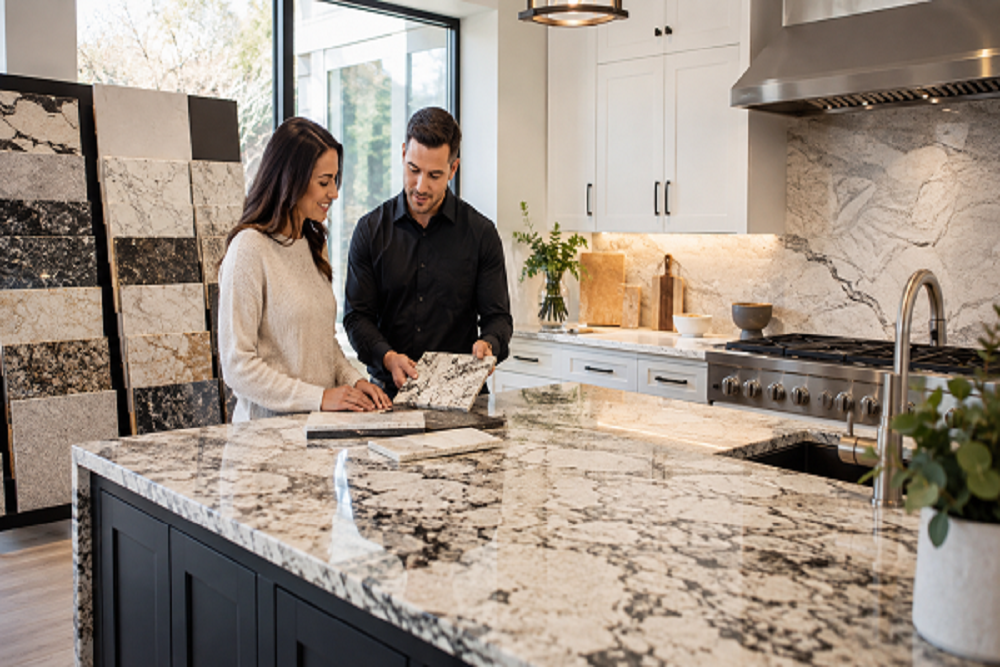
Granite forms naturally, so every slab looks different. Therefore, a small sample cannot show every vein, speck, or color shift. I prefer to view the full slab whenever possible. This gives me a better idea of how the stone may look across long countertop runs or a large island. Natural variation is part of granite’s appeal. However, it also means homeowners should not expect every section to look identical. Instead, I look for a slab whose overall movement complements the room.
Match Granite With Cabinet Color
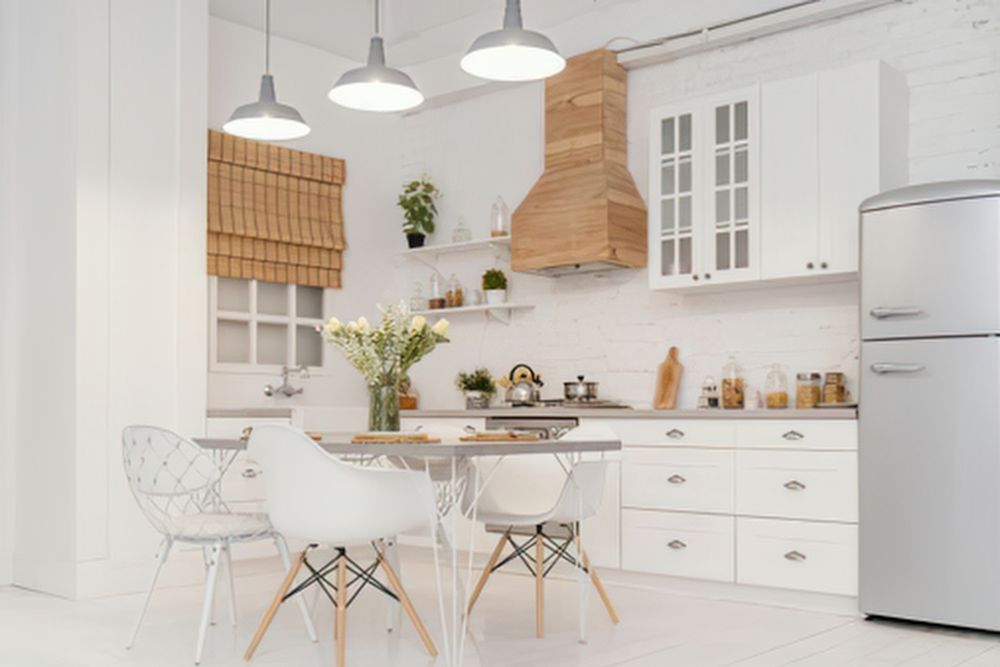
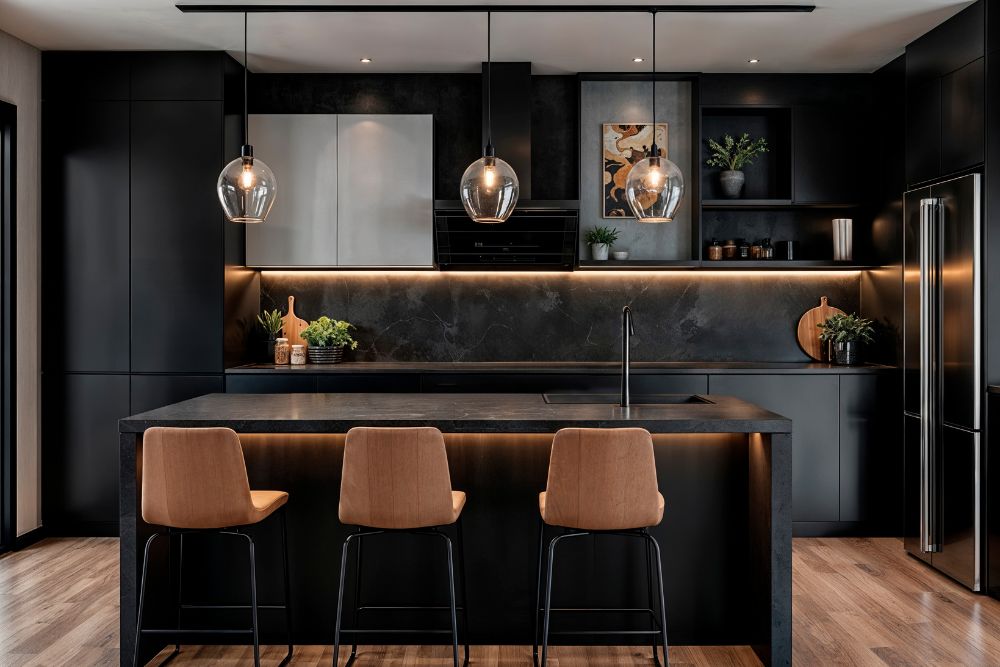
Cabinet color creates the background for the countertop. Therefore, I bring a cabinet sample when comparing granite options. White cabinets offer wide flexibility. For example, they can work with black, gray, cream, brown, and multicolor granite. Meanwhile, wood cabinets often look best when the granite includes tones that connect with the warmth of the grain. Dark cabinetry can create strong contrast with light granite. On the other hand, a darker countertop can create a rich, dramatic look. Therefore, I compare the materials side by side rather than relying on photos.
Check the Undertones
A countertop may appear neutral at first, but undertones become more noticeable once the slab enters the kitchen. Therefore, I look closely at warm and cool color directions. Warm granite may include cream, beige, gold, or brown. Meanwhile, cooler granite may show white, gray, black, or blue-gray movement. Lighting affects these colors as well. As a result, I try to view samples under both natural and artificial light.
Think About the Backsplash Early
I never leave the backsplash decision until the very end. Countertops and backsplash materials sit directly next to each other, so their patterns need to work together. If the granite has strong movement, I often prefer a quieter backsplash. However, subtle granite can support a more decorative tile. Therefore, I decide which surface should lead the design. This creates better visual balance and helps the kitchen feel intentional rather than crowded.
Evaluate the Supplier, Not Just the Stone
A beautiful granite slab cannot fix poor planning or inaccurate fabrication. Therefore, I also evaluate the company handling the project. Experienced countertop suppliers should be able to explain slab options, measurements, fabrication, seams, edge profiles, sink cutouts, and installation requirements. In addition, clear communication helps homeowners understand what happens from selection through final installation. I also look for a supplier who answers practical questions instead of simply pushing the most expensive material. A good countertop project should support the homeowner’s needs and budget.
Ask About Measurement and Templating
Precise measurement helps countertops fit correctly. Therefore, I make sure the cabinet installation is complete and stable before final templating. If cabinets are not level, the countertop may require adjustment. As a result, cabinet preparation matters before fabrication starts. I also provide appliance and sink information early. This allows the fabricator to plan openings accurately and avoid last-minute changes.
Consider Seam Placement
Some kitchens require seams because slab dimensions have limits. Therefore, seam placement should be discussed before fabrication. I prefer seams in less noticeable locations whenever possible. However, structural support, slab size, pattern direction, and installation access also affect where seams can go. Natural granite movement can make pattern matching more complex. Consequently, I ask how the fabricator plans to position each section of the slab.
Select the Right Edge
The edge profile changes the visual style of the countertop. Therefore, I chose it with the cabinet design in mind. Simple eased edges often fit modern and transitional kitchens. Meanwhile, more detailed profiles can complement traditional cabinetry. However, complex edges can also increase fabrication cost. For this reason, I compare appearance and budget before making the final choice.
Plan the Sink Area Carefully
The sink becomes one of the most-used areas of the countertop. Therefore, I give it extra attention. An undermount sink can create a smooth visual transition from stone to basin. However, the fabricator must finish the exposed granite edge carefully. I also consider faucet placement, soap dispensers, filtered water fixtures, and accessories before fabrication. This prevents unnecessary drilling later.
Look at Maintenance Needs
Granite offers excellent everyday performance when homeowners care for it properly. Therefore, I ask about sealing and cleaning recommendations for the selected stone. I usually recommend gentle cleaning products rather than harsh chemicals. In addition, wiping spills promptly helps keep the surface looking good. Maintenance does not have to be complicated. However, understanding the material from the beginning helps homeowners protect their investment.
Compare Samples in Real Kitchen Lighting
Showroom lighting can change the way stone appears. Therefore, I bring samples into the actual kitchen whenever possible. Morning light can make one color look cool, while evening lighting can make the same surface look warmer. In addition, under-cabinet lights can highlight certain mineral patterns. For Milwaukee homes, seasonal daylight also changes throughout the year. Therefore, I choose a granite color that looks balanced under more than one lighting condition.
Think About the Whole Kitchen
The countertop should connect with the entire room. Therefore, I compare it with cabinets, flooring, appliances, wall paint, backsplash tile, and hardware. A granite slab does not need to match every surface exactly. Instead, one or two shared tones can create a natural connection. For example, a stone with subtle gray movement may connect stainless appliances to white cabinets. Likewise, warm beige minerals may help wood flooring and cream cabinetry feel more unified.
Keep the Design Flexible
Countertops often stay in place longer than wall colors or cabinet hardware. Therefore, I think about future updates when selecting granite. A balanced stone can continue to work if homeowners repaint walls or change pendant lights later. However, that does not mean the countertop must be plain. I prefer a slab with enough personality to give the kitchen character while still leaving room for future design changes.
Consider Local Project Support
Working with a supplier who understands local homes and remodeling needs can simplify communication. In Milwaukee, kitchens range from compact older-home layouts to larger open-concept spaces. Therefore, countertop planning may require different approaches from one project to another. I value suppliers who explain what the room needs rather than applying the same solution everywhere. Measurements, seams, support, access, and installation logistics all deserve attention.
Final Thoughts
Choosing granite involves much more than picking a color from a small sample. I look at natural variation, cabinetry, lighting, backsplash, flooring, edges, sinks, seams, and maintenance before making a final decision. However, the supplier plays an equally important role. Accurate measurements, careful fabrication, clear communication, and professional installation help turn a beautiful slab into a functional countertop. Ultimately, I believe homeowners get better results when they select the material and the supplier together. A thoughtful process creates a kitchen that looks connected, works comfortably, and continues to feel right long after installation.