







Roads are exposed to constant pressure. From daily vehicle traffic and heavy trucks to changing weather conditions, moisture, and temperature fluctuations, asphalt surfaces can gradually develop cracks, potholes, depressions, and other forms of damage. While a small pothole may seem like a minor issue, leaving it untreated can allow the problem to spread and eventually require a much more expensive repair.
This is where professional asphalt repair services can make a significant difference. Properly carried out Asphalt Road Patching helps restore damaged areas, improve driving conditions, and protect the underlying pavement from further deterioration. Whether the road is located in a commercial property, residential development, industrial site, car park, or public area, timely patching can help maintain a safer and more functional surface.
What Is Asphalt Road Patching?
Asphalt road patching is a repair method used to restore sections of pavement that have been damaged by potholes, cracks, water penetration, surface deterioration, or heavy traffic. Rather than replacing the entire road, contractors focus on the affected areas and repair them using suitable asphalt materials and professional techniques.
The exact process depends on the severity and location of the damage. A professional contractor may remove weakened asphalt, prepare the damaged area, apply new asphalt, and compact the repaired section to create a stable and durable surface.
The goal is not simply to cover a pothole. Effective patching addresses the damaged section properly so that the repair integrates with the surrounding pavement and provides reliable performance.
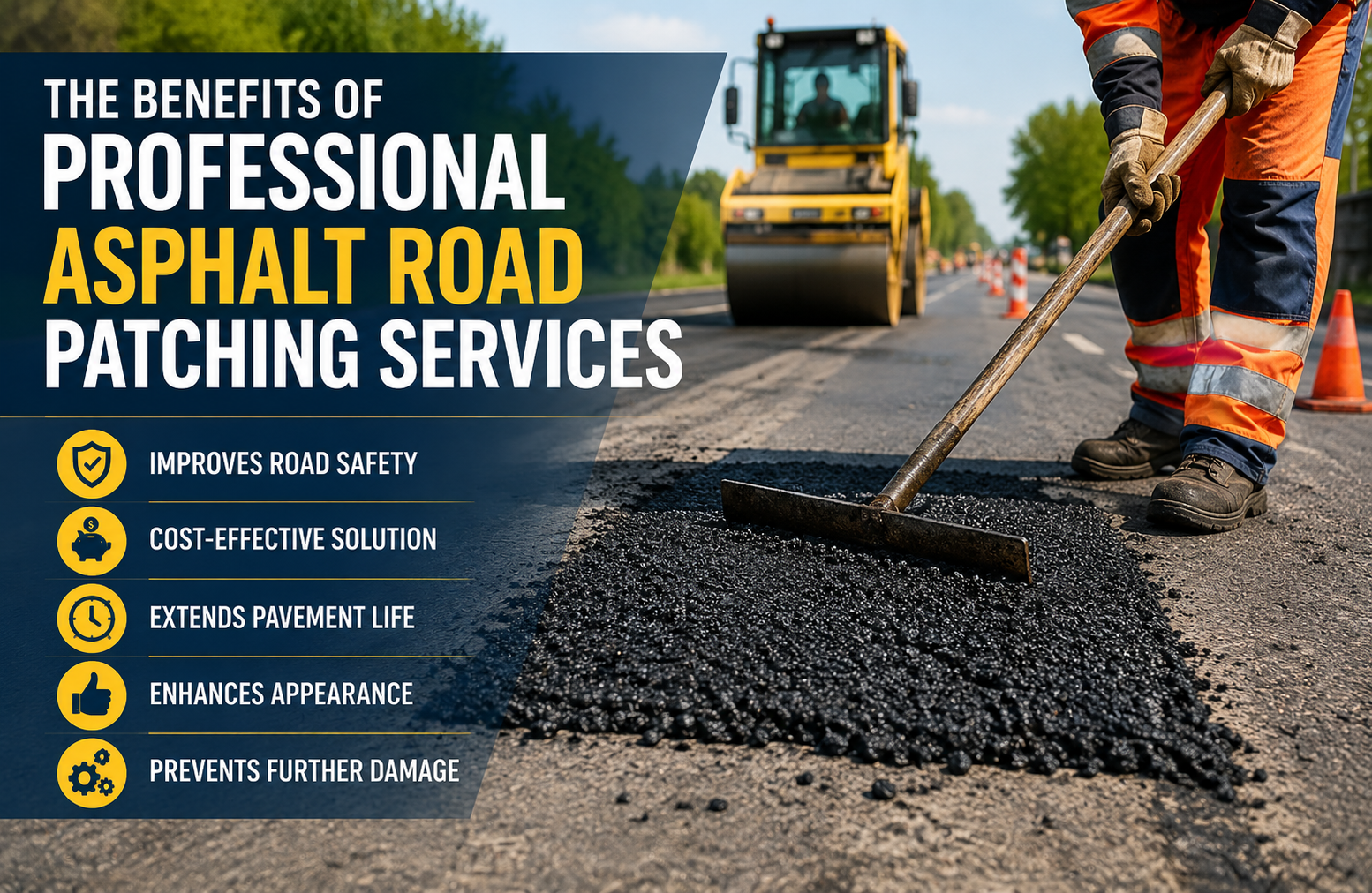
1. Improves Road Safety
One of the biggest advantages of professional road patching is improved safety.
Potholes, cracks, uneven surfaces, and deteriorated pavement can create hazards for motorists, cyclists, pedestrians, and commercial vehicles. Drivers may need to suddenly change direction to avoid damaged areas, increasing the possibility of accidents. Deep potholes can also cause damage to tyres, wheels, suspension components, and other vehicle parts.
Professional Asphalt Road Patching can eliminate or reduce these hazards by restoring damaged sections of the road. A smoother surface provides better driving conditions and reduces the risks associated with sudden bumps, uneven pavement, and potholes.
For businesses and property owners, maintaining safe access roads can also create a better experience for customers, employees, suppliers, and visitors.
2. Helps Prevent Further Pavement Damage
Small pavement problems rarely remain small forever.
A crack can allow water to enter the pavement structure. During periods of heavy rain, moisture can penetrate beneath the asphalt and weaken the supporting layers. Repeated traffic can then cause the damaged section to expand, eventually creating potholes or larger areas of pavement failure.
Timely repairs can interrupt this cycle. By addressing damaged areas before they become extensive, property owners can help protect the surrounding pavement.
This makes Asphalt Road Patching a useful preventative maintenance strategy as well as a repair solution. Regular inspections can help identify early signs of deterioration and allow repairs to be scheduled before the damage becomes significantly more difficult and expensive to address.
3. Extends the Life of Asphalt Pavement
Replacing an entire asphalt surface can be a substantial investment. If the majority of the pavement remains structurally sound, complete replacement may not always be necessary.
Professional patching allows contractors to concentrate resources on areas that actually require attention. By repairing damaged sections and maintaining the rest of the pavement, property owners can potentially extend the useful life of the existing surface.
Routine maintenance is particularly important for high-traffic areas. Parking lots, access roads, loading zones, industrial yards, and commercial driveways can experience considerable wear. Addressing localized damage early can help preserve these surfaces for longer.
4. Provides a Cost-Effective Repair Option
Budget is an important consideration when managing roads and paved areas. Full pavement replacement involves extensive preparation, material, equipment, labour, and potentially significant disruption.
Patching can offer a more targeted alternative when damage is limited to specific areas. Instead of replacing pavement that is still in good condition, contractors can focus on potholes, failed sections, and other localized problems.
However, cost savings depend on choosing the right repair method. Temporary fixes may provide short-term results but fail prematurely if the underlying problem is not addressed. Professional contractors can assess the condition of the pavement and recommend a repair approach appropriate to the damage.
In this way, Asphalt Road Patching can provide practical value by addressing immediate problems while helping property owners manage long-term maintenance costs.
5. Delivers Better Quality Repairs
Professional contractors have the experience, equipment, and knowledge required to complete asphalt repairs correctly.
Quality patching involves more than simply placing asphalt into a pothole. The damaged area generally needs to be properly prepared, cleaned, filled, and compacted. If preparation or compaction is inadequate, the repair may deteriorate quickly.
Professionals understand how factors such as pavement condition, drainage, traffic levels, weather, and material selection can affect the performance of a repair.
A properly completed repair creates a stronger connection between the new asphalt and the surrounding pavement, helping the repaired section withstand regular traffic and environmental exposure.
6. Enhances the Appearance of Roads and Properties
Road condition also affects the overall appearance of a property.
Cracked pavement, potholes, crumbling edges, and numerous temporary repairs can make a commercial or residential property look poorly maintained. This can be particularly noticeable at business premises, shopping centres, office developments, warehouses, and managed residential communities.
Well-maintained pavement creates a cleaner and more professional appearance. Professional Asphalt Road Patching can restore damaged areas and contribute to a more consistent surface.
For businesses, this can support a positive first impression. Customers often notice the condition of entrances, driveways, and parking areas before they enter a building.
7. Reduces Vehicle Damage
Road defects can have consequences beyond the pavement itself.
When vehicles repeatedly travel over potholes and uneven surfaces, components such as tyres, wheels, suspension systems, and steering parts can experience additional stress. Heavy commercial vehicles can be particularly affected because of their weight and frequent use.
Repairing damaged pavement helps create smoother travel conditions and may reduce unnecessary impact on vehicles.
For businesses operating fleets of vans, trucks, service vehicles, or other commercial vehicles, maintaining roads and access areas can therefore contribute to better operating conditions.
8. Minimises Disruption
Professional repair teams can often focus on specific damaged areas rather than closing an entire road or replacing a complete pavement section.
This targeted approach can be especially useful for businesses and industrial properties where access needs to remain available. Contractors can plan work around operating hours, traffic requirements, and site conditions where practical.
Reducing the size and scope of a repair can help minimise inconvenience for employees, customers, residents, and delivery vehicles.
9. Supports Proper Drainage
Water is one of the major contributors to pavement deterioration. Cracks, potholes, and depressions can collect water and allow moisture to move into the pavement structure.
Professional repairs can help restore the surface and reduce areas where water can accumulate. However, patching alone may not solve a problem caused by poor drainage or serious structural failure.
This is why a professional assessment is important. Contractors can determine whether the visible pavement damage is simply a surface issue or a symptom of a deeper drainage or foundation problem.
When Should Asphalt Patching Be Considered?
There is no need to wait until a pothole becomes large and dangerous before arranging an inspection. Property owners should consider professional repairs when they notice:
- New potholes appearing on the pavement
- Cracks becoming wider or deeper
- Loose or crumbling asphalt
- Depressed or uneven sections
- Water collecting in damaged areas
- Repeated deterioration in the same location
- Damage around drainage points or road edges
Early intervention can make repairs simpler and help prevent localized problems from developing into widespread pavement failure.
Choosing a Professional Asphalt Repair Contractor
The quality of the finished repair depends heavily on the contractor carrying out the work. When comparing service providers, look for experience with similar projects, appropriate equipment, quality materials, and a clear repair process.
A reliable contractor should also inspect the damaged area before recommending a solution. Not every pavement problem requires the same treatment. In some cases, patching may be appropriate, while more extensive deterioration may require resurfacing or reconstruction.
Ask about preparation methods, materials, compaction, expected durability, and maintenance recommendations. A professional approach should focus on solving the cause and condition of the pavement problem rather than simply making the damage look better temporarily.
Final Thoughts
Maintaining asphalt is an ongoing responsibility, particularly for roads and paved areas that experience heavy traffic or harsh environmental conditions. Small defects can quickly develop into larger and more expensive problems when they are ignored.
Professional Asphalt Road Patching provides a practical way to address localized pavement damage, improve safety, protect surrounding asphalt, enhance property appearance, and potentially extend pavement life. The key is to act early and use appropriate repair techniques rather than relying on temporary fixes.
With regular inspections and timely maintenance, property owners can keep roads and paved areas safer, smoother, and more reliable while avoiding unnecessary full-scale replacement. Investing in professional asphalt maintenance today can help protect the value and usability of pavement for years to come.