






The exterior facade of a commercial building is more than an architectural feature. It serves as an essential component of the building envelope, protecting interior spaces from weather exposure while contributing to structural performance, energy efficiency, and the building’s overall appearance. When exterior walls begin developing cracks, displaced materials, deteriorated joints, or moisture-related damage, the consequences may extend far beyond visible surface defects.
Timely building facade restoration helps property owners address deterioration before it develops into more complicated building-envelope problems. Exterior walls constantly face wind-driven rain, temperature changes, ultraviolet exposure, and environmental pollutants. These conditions gradually affect masonry, concrete, sealants, and other facade materials. Although some deterioration is cosmetic, certain defects can permit water infiltration or indicate underlying movement that requires professional evaluation.
Recognizing the difference between superficial wear and potentially significant damage is an important responsibility for commercial property managers. A small crack may result from ordinary material movement, but similar-looking damage can also indicate corrosion, inadequate movement joints, or moisture entering concealed wall assemblies. Understanding the causes of deterioration allows repair work to address building performance rather than appearance alone.
Understanding the Role of a Commercial Building Facade
A building facade typically consists of multiple materials and components working together. Depending on the structure, the exterior may include brick masonry, architectural stone, precast concrete, stucco, metal panels, glass, or insulated cladding systems.
Each material responds differently to environmental conditions. Some absorb moisture, while others rely on carefully detailed joints and drainage systems to manage water exposure.
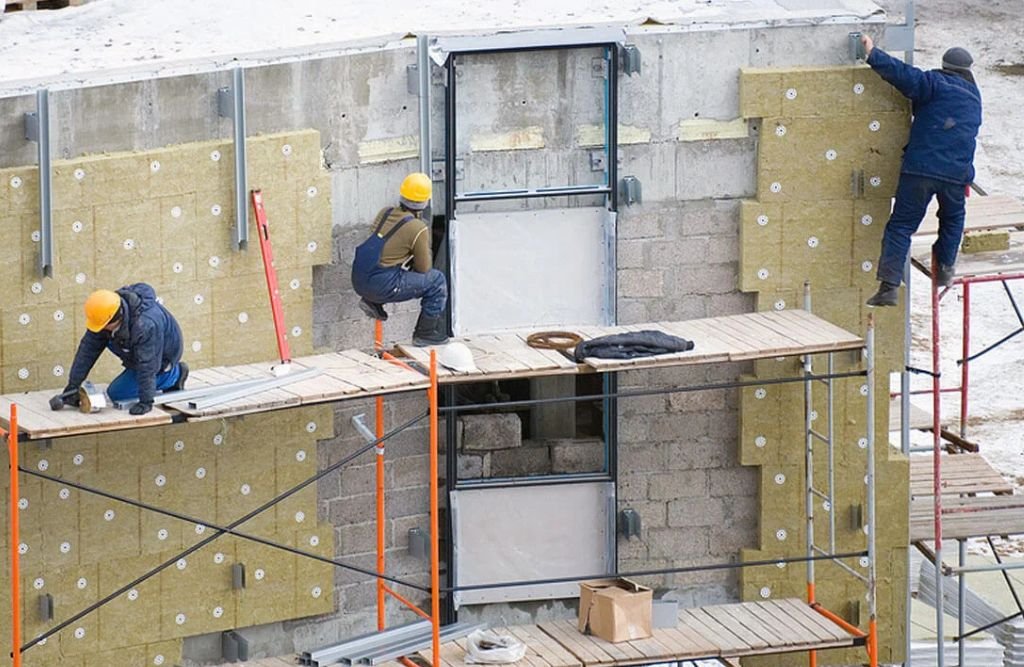
Specialized commercial eifs repair becomes relevant when exterior insulation and finish systems develop cracks, impact damage, failed sealant connections, or defects that compromise moisture protection. Because EIFS assemblies vary in design, identifying whether the system uses barrier or drainage principles is essential before selecting a repair method.
A facade’s performance depends on the condition of the complete wall assembly, including elements that may not be visible from the outside.
Weather Resistance and Moisture Management
Exterior walls must resist rain while allowing moisture to be managed according to the wall system’s design. Some assemblies rely on drainage cavities, flashing, and weep openings to redirect water toward the exterior. Others depend heavily on continuous protective layers and carefully sealed penetrations. If these features fail, moisture can reach insulation, framing, or interior finishes.
Structural and Architectural Functions
Certain facade components are structural, while others serve as non-load-bearing cladding attached to the main building frame. This distinction matters because the consequences of deterioration differ.
Loose architectural elements may create falling-material hazards, while cracking in load-bearing masonry can require structural investigation. Repairs should therefore reflect the function of the affected material rather than treating all exterior surfaces alike.
How Facade Deterioration Develops Over Time
Exterior deterioration rarely follows a single predictable pattern. Material composition, construction quality, climate exposure, and maintenance history influence how damage progresses. The same building may experience different problems on different elevations because of variations in sunlight, wind-driven rain, and drainage.
Freeze-Thaw Damage in Masonry
Porous masonry materials can absorb moisture during wet conditions. When sufficiently saturated materials experience freezing temperatures, ice formation can place stress on the surrounding pores and contribute to deterioration. Repeated cycles may eventually cause surface scaling, cracking, or spalling. The severity depends on material durability, moisture exposure, and environmental conditions. Repairing the visible damage without addressing excessive moisture can allow similar problems to return.
Deteriorating Mortar Joints
Mortar joints provide important functions in masonry construction, including accommodating certain movements and helping manage water exposure. Over time, mortar may crack, erode, or separate from adjacent masonry units. Open joints can increase water penetration and reduce the wall’s resistance to environmental exposure.
However, repointing requires compatible mortar. A mix that is excessively hard or impermeable relative to historic masonry can contribute to further damage.
Corrosion of Embedded Metal Components
Steel lintels, shelf angles, anchors, and reinforcing elements may be exposed to moisture when protective systems deteriorate. Corrosion products occupy more volume than the original steel, potentially generating expansive forces against surrounding masonry or concrete. This can create cracking, displacement, or spalling. Surface patching alone cannot resolve an active corrosion problem if the underlying metal remains compromised.
Recognizing Warning Signs Before Serious Damage Occurs
Commercial building exteriors should be inspected for changes that may indicate deterioration. Some symptoms are easily visible from the ground, while others require close-range access and specialized investigation.
Cracks Around Windows and Wall Openings
Cracks frequently appear around corners of windows, doors, and other openings because these locations experience changes in geometry and stress concentration. Their significance depends on width, direction, movement, and surrounding construction. A narrow, stable crack may require a different response from a widening stair-step crack in masonry. Documenting crack patterns over time can help determine whether further investigation is necessary.
Bulging, Displacement, and Loose Materials
Visible bulging or displaced facade elements should receive prompt professional attention. These conditions may indicate deteriorated connections, movement, corrosion, or loss of support. Loose masonry and cladding can create serious hazards for pedestrians and building occupants. When instability is suspected, the affected area may need to be secured until qualified professionals assess the condition.
Persistent Staining and Efflorescence
White crystalline deposits on masonry, commonly called efflorescence, occur when soluble salts migrate with moisture and crystallize at the surface. Although efflorescence does not always indicate severe damage, it can reveal ongoing moisture movement. Rust staining may suggest corrosion of embedded metal components.
Dark streaks near joints or penetrations can indicate repeated runoff or water-management deficiencies. Identifying the source is more useful than repeatedly cleaning away the visible marks.
Why Water Intrusion Creates Hidden Facade Problems
Water can enter exterior wall systems through open joints, deteriorated sealants, failed flashing, improperly detailed penetrations, or damaged cladding. Once inside, it may travel through cavities or along structural components before appearing indoors.
As a result, the location of visible interior damage does not always correspond to the original entry point.
Moisture Trapped Behind Exterior Cladding
Some wall systems include cavities or drainage layers designed to manage incidental moisture. When drainage openings become blocked or protective layers are damaged, water may accumulate where it should not remain. Depending on the assembly, prolonged wetting can affect insulation, sheathing, framing, and attachment components.
A proper investigation should evaluate how moisture enters, moves through, and exits the wall.
Damage to Interior Finishes
Water intrusion may produce staining, peeling paint, damaged plaster, or deterioration of other finishes. Repairing these interior symptoms without correcting the exterior source often leads to repeated problems. Persistent dampness can also create conditions favorable to microbial growth. The response should include source correction and assessment of affected materials.
Different Facade Materials Require Different Restoration Methods
A successful restoration project begins with understanding the existing materials and their performance characteristics. A repair method suitable for concrete may be inappropriate for natural stone, brick masonry, or synthetic exterior finishes.
Brick and Masonry Restoration
Masonry repairs may involve replacing damaged units, repointing deteriorated joints, correcting flashing, or stabilizing localized areas. Material compatibility is especially important in older buildings. Replacement brick and mortar should be selected with consideration for strength, absorption, appearance, and thermal behavior. Improper repairs can redirect stresses or trap moisture, causing additional deterioration.
Concrete Facade Repairs
Concrete deterioration may result from carbonation, chloride exposure, reinforcement corrosion, cracking, or other mechanisms. Effective repair typically requires identifying the cause before removing damaged material. Where reinforcing steel is affected, the repair scope may include corrosion treatment, steel assessment, suitable repair mortar, and protective measures.
Structural concerns require evaluation by appropriately qualified professionals.
EIFS and Stucco Restoration
Traditional stucco and EIFS have different material compositions and construction details, even though their finished surfaces can sometimes look similar. Stucco repairs may involve addressing cracks, deteriorated plaster layers, or substrate problems.
EIFS repairs require compatible components and attention to reinforcement mesh, base coats, finish coats, sealants, and moisture-management details. Incorrect patching can create visible inconsistencies or interfere with the assembly’s intended performance.
The Critical Role of Sealants and Movement Joints
Commercial buildings move in response to temperature changes, structural loading, and other conditions. Movement joints are designed to accommodate these changes without placing excessive stress on surrounding materials. When joints become blocked, improperly repaired, or filled with unsuitable materials, cracking and displacement may develop nearby.
Why Sealants Fail
Exterior sealants can deteriorate through aging, ultraviolet exposure, excessive joint movement, improper installation, and loss of adhesion. A sealant joint may also fail when the wrong product is selected for the substrate or expected movement. Simply applying fresh sealant over deteriorated material rarely provides a reliable long-term solution.
Proper Joint Preparation
Successful sealant replacement requires attention to joint geometry, substrate preparation, compatibility, and movement requirements. Existing failed sealant may need to be removed, and the substrate must be suitable for adhesion. Backer rods or bond-breaking materials may be necessary to establish appropriate joint behavior. These details are essential because sealant performance depends as much on correct installation as on product quality.
Planning Facade Restoration Without Unnecessary Building Disruption
Commercial restoration projects frequently take place while buildings remain occupied. This creates logistical challenges involving access, pedestrian safety, noise, dust, and coordination with normal operations. Careful planning helps reduce these effects.
Establishing a Clear Scope of Work
Before construction begins, the project team should identify affected areas and determine which conditions require repair, replacement, or further investigation. A clear scope reduces the likelihood of treating symptoms while overlooking underlying defects. Where concealed conditions remain uncertain, the project may require exploratory openings or additional testing.
Managing Access and Safety
Facade work can require scaffolding, suspended platforms, aerial lifts, or other access equipment. The appropriate method depends on building height, site conditions, the repair location, and applicable safety requirements. Pedestrian protection and safe work zones are particularly important in densely occupied commercial areas.
Coordinating With Tenants
Exterior repairs can affect building entrances, windows, loading zones, and outdoor activity areas. Advance communication helps tenants understand potential interruptions and temporary access changes. Scheduling work around operational priorities can improve project efficiency without compromising safety.
Why Restoration Should Address Causes Rather Than Symptoms
A recurring mistake in exterior repair is focusing only on visible damage. Repainting a stained wall does not stop an active leak. Patching a concrete spall without investigating reinforcement corrosion may allow deterioration to continue. Replacing damaged masonry without correcting faulty drainage can produce repeated moisture problems.
Effective restoration requires identifying the mechanism responsible for the defect. The repair should then restore the relevant function of the affected component. In some cases, this means improving flashing or drainage. In others, it involves replacing failed attachments, correcting movement joints, or addressing corroded metal. The appropriate intervention should be proportional to the actual condition and supported by professional assessment.
Building a Preventive Facade Maintenance Program
Commercial facade maintenance should follow an organized process rather than relying entirely on emergency repairs. Routine visual observations can identify developing cracks, staining, loose sealants, and changes in exterior materials. More detailed inspections should be scheduled based on building age, exposure, construction type, observed defects, and local requirements.
Maintenance records are especially valuable because they help professionals compare current conditions with previous findings. Photographs and dated observations can reveal whether cracking is progressing or whether earlier repairs remain effective. For buildings in New Jersey and surrounding regions, seasonal temperature changes, precipitation, and winter exposure make moisture management particularly important. A consistent maintenance program helps preserve the building envelope while supporting responsible repair planning.
Conclusion
Commercial facade deterioration can begin with small surface defects but eventually affect moisture resistance, material stability, occupant safety, and long-term building performance. Cracking, displaced masonry, corroded components, failed sealants, and moisture staining should be evaluated in relation to the complete exterior wall system. Successful restoration depends on understanding the construction materials, identifying underlying causes, and selecting compatible repair methods. Cosmetic improvements may be part of the work, but they should not replace necessary corrective measures.