








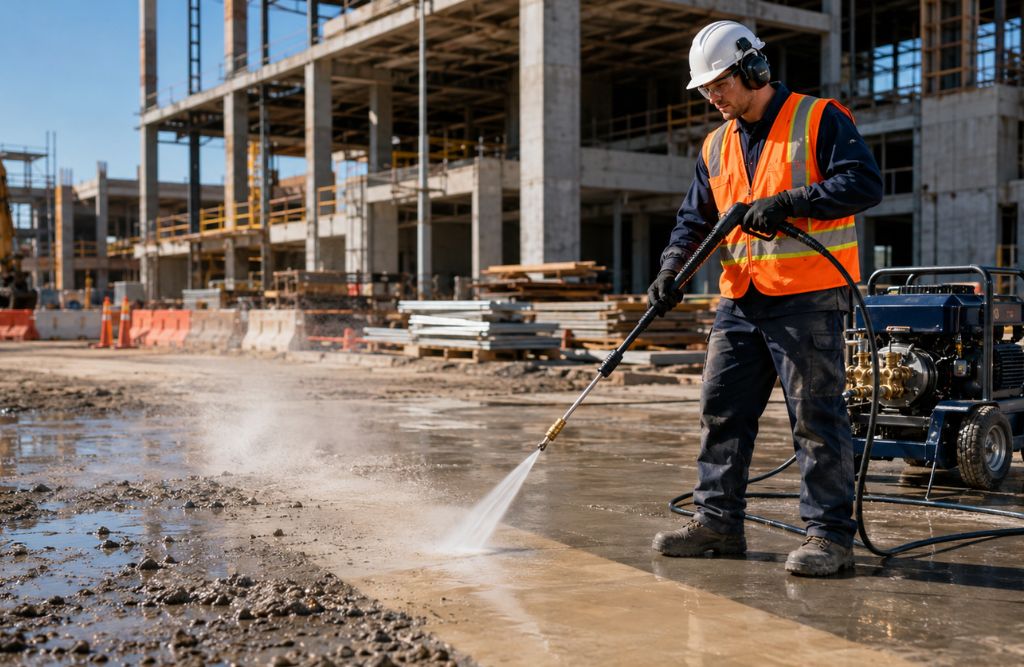
Construction sites get dirty fast. Mud sticks to access roads, concrete splashes harden on tools, and grease builds up around heavy machinery. Meanwhile, dust settles on almost every exposed surface. A basic garden hose will not handle this level of buildup.An industrial pressure washer gives construction crews the power needed to remove stubborn contaminants efficiently. However, using more pressure is not always the answer. The machine, nozzle, water temperature, and cleaning method must suit the surface.
New Jersey construction teams also face changing weather conditions. Heavy rain creates mud, while winter brings road salt and frozen residue. If crews ignore this buildup, it can damage equipment, create safety risks, and delay inspections.
This guide explains how to choose the right pressure-washing solution for a construction site. It also covers common applications, mistakes to avoid, and practical ways to control cleaning costs.
Why Construction Site Buildup Is More Than a Cosmetic Problem
A dirty construction site does not simply look unfinished. Mud, oil, loose debris, and wet dust can make walkways slippery. Workers may also track contaminants into completed areas. Using an industrial pressure washer helps remove this heavy buildup before it spreads and affects other parts of the project.
Equipment is another concern. Dirt can collect around moving parts, cooling systems, and hydraulic components. Left untreated, that buildup may trap heat or conceal minor leaks. Crews might not notice a damaged hose or loose fitting until the machine stops working.
Site cleanliness can also affect inspections and handovers. Imagine reaching the final project stage only to find concrete residue covering a loading area. The cleanup then becomes urgent, putting added pressure on the crew and schedule. Planned pressure washing is usually faster and easier than a rushed final cleanup.
Where Industrial Pressure Washing Equipment Makes the Biggest Difference
Construction sites contain many materials, and each one creates a different cleaning challenge. A suitable machine can handle several tasks, but operators must adjust the setup between surfaces.
Heavy machinery and construction vehicles
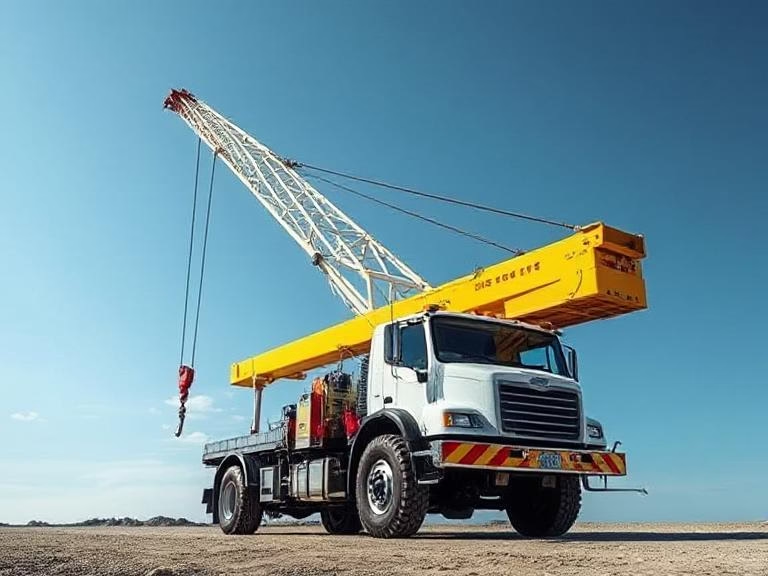
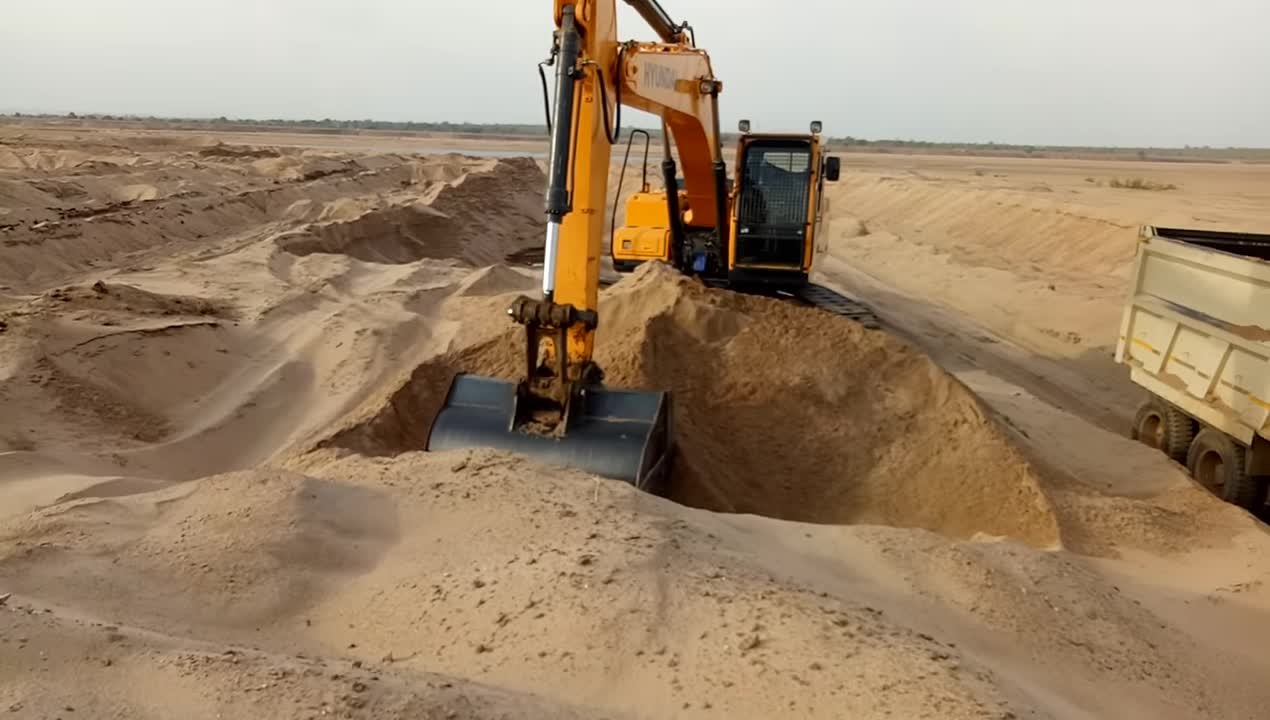
Excavators, loaders, dump trucks, and other machines collect thick layers of mud and grease. Regular washing makes inspections easier because workers can see hoses, fittings, and metal surfaces clearly. It also prevents dirt from being carried onto roads or completed areas.
Operators should protect electrical parts, bearings, seals, and exposed controls. Directing a narrow high-pressure stream into these components can force water past protective barriers. A wider spray pattern and sensible working distance provide safer results.
Concrete slabs and access routes
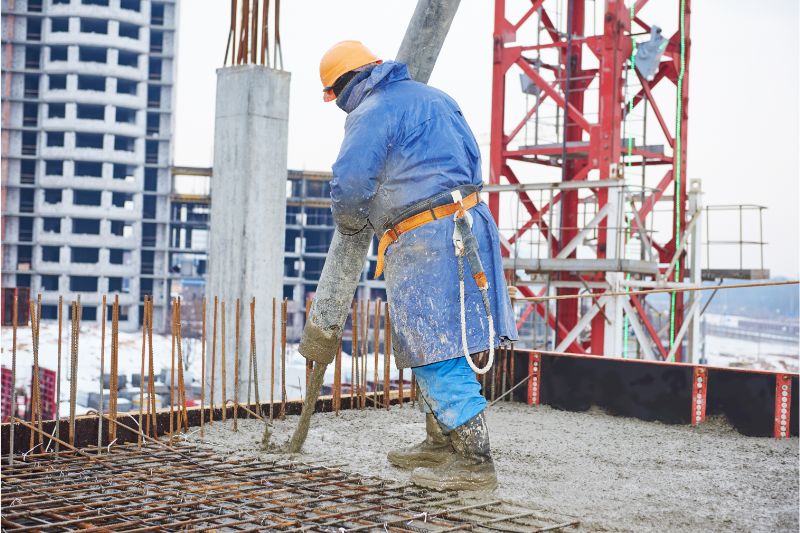
Concrete areas often collect soil, tire marks, oil, and material spills. A surface cleaner can wash broad areas more evenly than a standard wand. It also controls overspray, which matters near workers, vehicles, and finished walls.
New concrete needs extra care. Washing it too soon or using excessive force may damage the surface. Crews should confirm that the concrete has cured sufficiently before starting any aggressive cleaning.
Walls, tools, and temporary structures
Building exteriors, forms, scaffolding components, and reusable tools may also need washing. However, painted surfaces and temporary site materials can be more delicate than they appear. Testing a small area first reduces the chance of visible damage.
Choosing the Right Heavy-Duty Pressure Washer for the Job
Machine selection should begin with the type of contamination, not the highest available PSI. Pressure helps break the bond between dirt and a surface. Water flow then carries the loosened material away. A powerful machine with weak water flow may clean slowly because debris remains in place.
Hot-water units work well on grease, oily residue, and similar contaminants. Heat softens the buildup, allowing detergent and pressure to work more effectively. Cold-water machines are often suitable for loose soil, mud, dust, and general rinsing.
Power source matters as well. Electric units can suit indoor or noise-sensitive areas with suitable power and ventilation. Gas and diesel machines provide more mobility outdoors. Trailer-mounted systems may be useful when crews must clean several areas or lack a reliable water supply.
Construction teams may also require commercial cleaning equipments for tasks a pressure washer cannot complete alone. Wet vacuums, floor scrubbers, sweepers, steam cleaners, and water-recovery systems can support a more complete cleanup plan. Choosing compatible commercial-grade cleaning machines prevents crews from forcing one tool to perform every job.
A Practical Cleaning Process That Saves Time and Water
Pressure washing becomes more efficient when crews follow a clear sequence. Starting the machine and spraying randomly usually wastes water. It can also spread contaminants into areas that were already clean.
Inspect and secure the area
First, look for electrical connections, loose materials, open doors, broken surfaces, and nearby workers. Move portable items away from the cleaning zone. Cover sensitive components when necessary and confirm that water will drain safely.
The operator should also identify the surface material and contaminant. Oil requires a different approach than mud. Likewise, cured concrete can tolerate more force than painted siding or fresh mortar.
Pretreat stubborn buildup
Detergent can reduce the amount of pressure needed. Apply a product designed for the contaminant and surface. Then allow enough dwell time for it to loosen the buildup. Do not let the solution dry, especially on warm or windy days.
Thick deposits may need light scraping before washing. This extra step can save water because the pressure washer does not have to break down a large mass by itself.
Clean in controlled sections
Work from the top downward where the layout allows it. Keep the nozzle moving and maintain a consistent distance from the surface. Overlapping passes produce a more even finish than scattered spraying.
After finishing one section, inspect it before moving forward. If residue remains, adjust the detergent, temperature, nozzle, or working speed. Raising the pressure should not be the automatic response.
Costly Pressure-Washing Mistakes Construction Crews Should Avoid
Maximum pressure is not suitable for every surface. A concentrated stream can scar wood, strip paint, damage seals, or weaken fresh concrete. It may even drive water into wall joints and electrical housings. The damage can cost far more than the cleaning work.
Nozzle selection causes similar problems. A narrow nozzle concentrates force into a small area, while a wider nozzle spreads it out. Operators should begin with a safer spray angle and test an inconspicuous section. They can adjust the setup after seeing how the surface reacts.
Runoff also deserves attention. Pressure washing may carry oil, chemicals, paint particles, and sediment toward storm drains. Crews should identify where the wastewater will travel before cleaning begins. Depending on the contamination and site requirements, they may need barriers, recovery mats, vacuums, or approved disposal methods.
Poor machine care is another expensive mistake. Clogged filters, worn nozzles, damaged hoses, and low pump oil can reduce performance. A short inspection before use often prevents an unexpected shutdown halfway through the job.
Smarter Ways to Improve Safety, Speed, and Cleaning Results
A trained operator will usually achieve better results than an inexperienced person using a stronger machine. Workers need to understand nozzle selection, safe distances, startup procedures, and shutdown steps. They should also wear suitable eye protection, footwear, gloves, and other site-required equipment.
Cleaning should match the construction schedule. For example, washing access routes before a delivery can reduce mud around the unloading area. Cleaning machinery before maintenance gives technicians a clearer view. Likewise, washing concrete before sealing helps prevent dirt from becoming trapped beneath the coating.
Keep common replacement items nearby. Spare nozzles, filters, O-rings, hose fittings, and trigger-gun components can prevent long delays. However, crews should never operate damaged hoses or attempt unsafe temporary repairs.
The right mix of professional cleaning equipment can also reduce labor. A pressure washer may loosen heavy soil, while a wet vacuum collects wastewater. A floor scrubber can then finish a large indoor slab more evenly. Combining machines thoughtfully often works better than relying on pressure alone.
Building a Reliable Cleaning Plan for New Jersey Sites
Every project needs a slightly different plan. A roadwork crew may focus on vehicles, barriers, and muddy access points. A warehouse project may need clean interior floors before racks arrive. Residential developments often require careful washing near siding, landscaping, windows, and neighboring properties.
Consider a crew preparing for an inspection after several rainy days. Mud covers the entrance, tire marks cross the slab, and an excavator has an oily film around its service area. The team could first scrape away heavy soil, pretreat the greasy sections, and wash the machinery using controlled pressure. Next, they could clean the concrete with a surface attachment and recover dirty water where required. That planned sequence is quicker than attacking every area with the same nozzle.
Buying makes sense when cleaning is frequent and the machine will stay productive. Renting may be more practical for occasional jobs, specialized hot-water work, or temporary demand. Maintenance costs, storage space, transport, operator training, and expected usage should all influence the decision.
Pressure King helps New Jersey contractors evaluate construction-site pressure washing systems, rentals, parts, and repair needs. The goal should be a dependable setup that fits the actual workload—not simply the largest machine available.
Conclusion: Cleaner Sites Keep Projects Moving
Construction-site cleaning affects much more than appearance. It supports safer movement, clearer equipment inspections, smoother maintenance, and better project handovers. A planned approach can also reduce wasted water and unnecessary labor.
Start by identifying the contaminant and surface. Then choose suitable pressure, water flow, temperature, detergent, and accessories. Test the setup before cleaning a large area, and adjust one factor at a time.
Most importantly, treat pressure washing as part of the project schedule. Regular cleanup is easier to manage than a major rush before an inspection or handover.
Frequently Asked Questions
How much PSI is suitable for a construction site?
There is no single PSI level for every task. Heavy concrete and machinery may tolerate stronger pressure, while painted surfaces, seals, and fresh masonry need a gentler approach. Start low, test the surface, and increase pressure only when necessary.
Can pressure washing remove dried concrete from equipment?
It may remove thin splashes or weakened residue, especially after suitable pretreatment. Thick, fully cured concrete can be difficult to remove and may require careful mechanical methods. Aggressive washing can damage paint, hoses, seals, and electrical parts.
Is hot water better for oil and grease?
Usually, yes. Heat helps soften greasy buildup and improves detergent performance. However, operators must still use a suitable degreaser and manage contaminated wastewater correctly.
How often should construction machinery be washed?
The right schedule depends on operating conditions. Machinery working in deep mud or around corrosive materials may need frequent cleaning. At minimum, wash it before detailed inspections, maintenance, transport, or long-term storage