




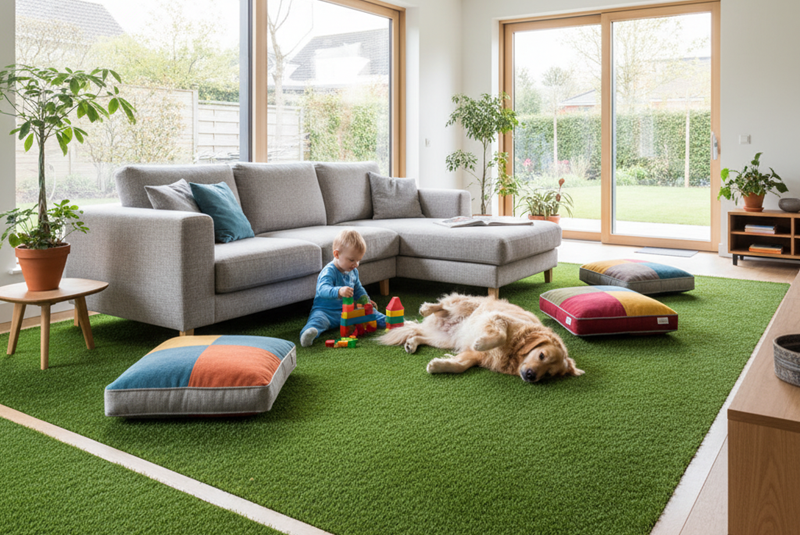
Ever looked at your patchy lawn and wondered if there’s a better way? Between mowing, watering, and constant repairs, natural grass can quietly steal your weekends. With water restrictions increasing across Australia, many homeowners are now considering synthetic grass as a smarter alternative.
This guide explores everything you need to know about artificial turf. From how synthetic grass works to its benefits, lifespan, and suitability for families and pets, you’ll be able to decide if switching makes sense for your lifestyle and outdoor space.
What Is Synthetic Grass?
Synthetic grass is a manufactured turf designed to closely resemble natural lawn. Modern versions are a significant upgrade from older AstroTurf, offering improved realism, comfort, and performance.
Artificial turf is made from durable fibres tufted into a backing layer. These fibres mimic natural grass blades, while drainage holes allow water to pass through easily. An infill layer helps the blades stay upright and adds cushioning underfoot.
Thanks to advances in technology, today’s synthetic grass features natural colour variations, different blade shapes, and UV protection. The result is a lawn that looks green and well-kept throughout the year.
.jpg)
Types of Synthetic Grass Available
Polyethylene Synthetic Grass
- Polyethylene synthetic grass is the most common choice for residential spaces. It feels soft underfoot and delivers a realistic appearance, making it ideal for backyards and entertaining areas.
- This type balances durability and comfort, which is why it suits everyday family use.
Nylon Synthetic Grass
- Nylon turf is the most durable option available. It holds its shape extremely well and performs best in high-traffic areas.
- While tougher than other types, nylon grass feels firmer and is often used in play zones or shared spaces rather than relaxation areas.
Polypropylene Synthetic Grass
- Polypropylene grass is best suited for decorative or low-traffic areas. It is lighter and less resilient but works well for balconies, courtyards, and visual landscaping features.
How Modern Synthetic Turf Differs From Old Astro Turf
Older astro turf was flat, harsh, and easily overheated. Modern synthetic grass looks and behaves much more like natural lawn.
Today’s products use varied blade heights and multi-tone colours, including subtle brown thatch layers. This eliminates the artificial “plastic carpet” appearance.
Improved drainage systems and cushioned underlays also make modern synthetic grass more comfortable and functional, even after rain or heavy use.
Key Benefits of Synthetic Grass
Synthetic grass offers more than convenience. It provides long-term lifestyle and environmental benefits that appeal to modern homeowners.
A synthetic lawn stays neat and green in all seasons. There are no bare patches, muddy areas, or sudden lawn emergencies before guests arrive.
Water Conservation and Sustainability
Natural lawns require large amounts of water to stay healthy. Synthetic grass removes this demand completely.
By eliminating irrigation, artificial turf helps reduce water usage and supports drought-friendly landscaping. This makes it especially appealing in dry climates and water-restricted areas.
Synthetic grass also reduces reliance on fuel-powered lawn equipment, contributing to lower emissions and less environmental impact over time.
Low Maintenance, Year-Round Appeal
One of the biggest advantages of synthetic grass is minimal maintenance. There’s no mowing, fertilising, or re-seeding required.
The lawn looks consistent all year, regardless of weather or foot traffic. This makes synthetic turf ideal for busy households, rental properties, and holiday homes.
With less time spent on upkeep, homeowners can enjoy their outdoor space instead of working on it.
Synthetic Grass for Dogs and Pets
Maintaining natural grass with pets can be challenging. Digging, worn patches, and odours are common issues.
Synthetic grass for dogs is designed with excellent drainage. Liquids pass through quickly, while solid waste is easy to remove.
The surface is resistant to digging and doesn’t develop muddy areas. This keeps both the lawn and the home cleaner, while creating a more hygienic environment for pets.
Artificial Turf Play Areas for Children
Synthetic grass is increasingly used to create safe and reliable play areas for children. The even surface reduces trip hazards found in worn natural lawns.
Modern installations often include cushioned layers that improve comfort and safety. Children can play year-round without mud, mess, or grass stains.
Artificial turf also removes exposure to lawn chemicals and pollen, making outdoor play more accessible for children with allergies.
Understanding the Lifespan of Synthetic Grass
A common question homeowners ask is how long synthetic grass actually lasts. The answer depends on product quality, usage, and installation.
High-quality synthetic turf can remain functional and attractive for many years. Advances in fibre strength and UV protection have significantly improved durability.
Factors That Affect Longevity
Sun exposure plays a role, as constant UV rays gradually wear down fibres. Areas with heavy foot traffic also experience faster wear than decorative sections.
Installation quality is critical. Proper base preparation and drainage prevent uneven surfaces and premature damage.
Regular light maintenance, such as brushing high-use areas, also helps extend the lifespan of synthetic grass.
Signs Synthetic Grass Needs Replacing
Flattened blades that no longer recover can indicate fibre fatigue. Visible backing or seam separation is another sign replacement may be required.
Persistent odours despite cleaning may suggest buildup beneath the surface. At this stage, replacing the turf often becomes the most effective solution.
Choosing the Best Synthetic Grass for Your Needs
Selecting the right synthetic grass depends on how the space will be used. A family backyard has different requirements than a decorative front lawn.
Identifying your priorities early helps narrow down options and ensures long-term satisfaction.
What to Look for in Quality Synthetic Grass
Good synthetic grass combines realistic appearance with durability. Look for varied blade shapes, natural colour tones, and dense stitching.
Strong backing materials and effective drainage are essential for performance in Australian conditions. UV stability is also critical for maintaining colour over time.
Synthetic Grass for High-Traffic Areas
High-traffic zones benefit from denser turf with shorter blades. These designs recover faster and resist matting.
Using more durable synthetic grass in walkways or play zones, while installing softer turf elsewhere, creates a balanced and practical layout.
Is Synthetic Grass Worth It?
Whether synthetic grass is worth it depends on your lifestyle and expectations. For homeowners seeking a neat, low-maintenance lawn, artificial turf offers clear advantages.
It removes the ongoing effort associated with natural grass while providing consistent visual appeal. The time saved alone makes a noticeable difference for busy families.
Those who enjoy hands-on gardening or prefer organic landscapes may still favour natural lawns. However, for convenience and reliability, synthetic grass is a strong alternative.
Final Thoughts: Making the Right Choice
Switching to synthetic grass is a long-term decision that benefits from careful planning. Understanding usage needs, selecting quality materials, and ensuring proper installation are key to success.
If you’re ready to reduce maintenance and enjoy a clean, green lawn year-round, synthetic grass is worth exploring. Take the next step, assess your outdoor space, and choose a solution that supports your lifestyle and long-term goals.