








Have you ever wondered why your water pump seems to cycle on and off more than it should? Or perhaps you’ve noticed your water pressure isn’t quite what it used to be? If you’re relying on a bladder tank for your home or farm water system, these could be early warning signs that your tank needs some attention.
Bladder tanks are the unsung heroes of many Australian water systems. They work tirelessly behind the scenes, maintaining consistent water pressure and protecting your pump from unnecessary wear. Yet, like any hardworking piece of equipment, they need regular care to perform at their best. Without proper maintenance, you could be looking at costly repairs or premature replacement.
In this guide, we’ll walk you through everything you need to know about keeping your bladder tank in peak condition. From understanding how these tanks actually work to spotting the telltale signs of trouble, you’ll learn practical tips that can extend your tank’s lifespan significantly. Whether you’re a homeowner with a rainwater system or a farmer managing large-scale water storage, these maintenance strategies will help you get the most out of your investment.
Understanding Your Bladder Tank
How Does a Bladder Tank Work?
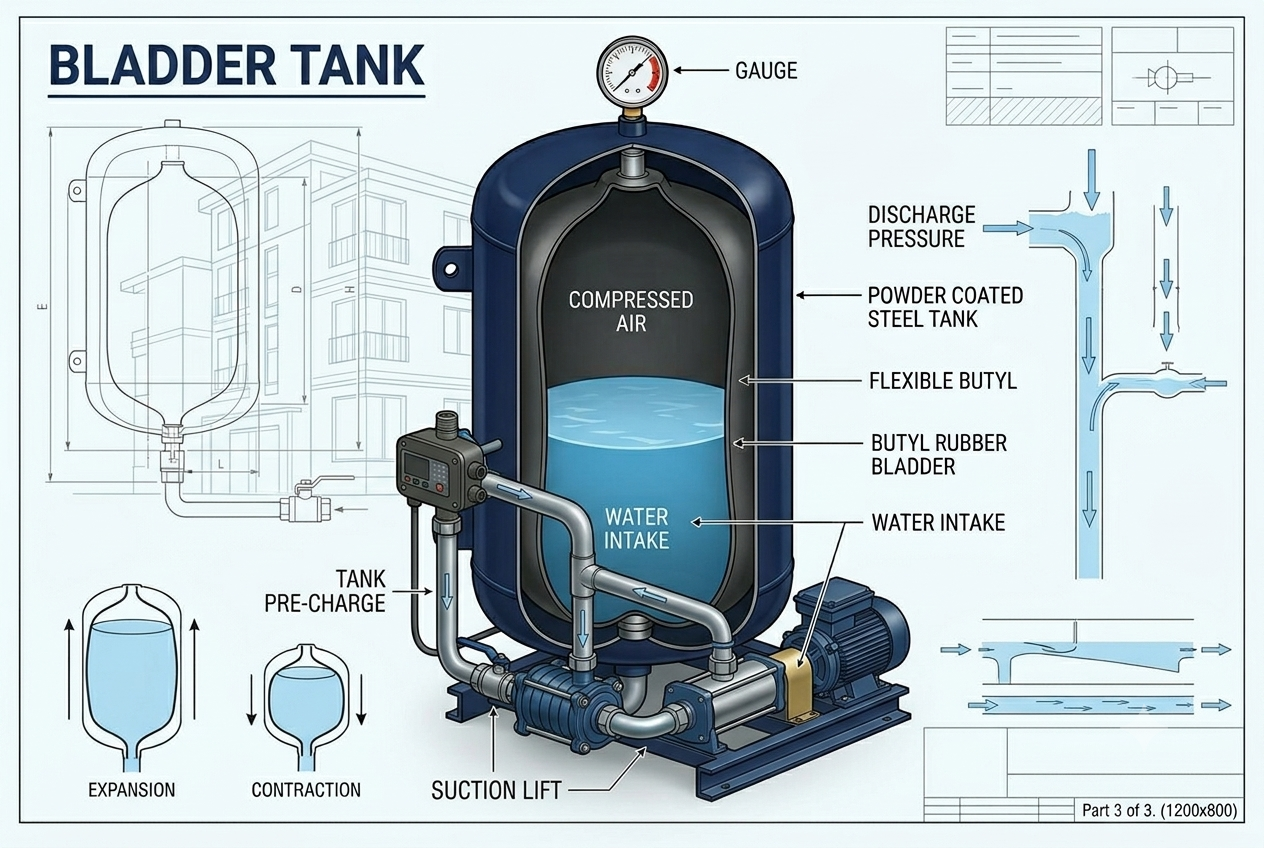
A bladder tank might look simple from the outside, but there’s clever engineering happening inside. The tank contains a flexible rubber bladder that holds your water, surrounded by pressurised air. When your pump fills the bladder with water, the air compresses. Then, when you open a tap, that compressed air pushes the water out, maintaining steady pressure throughout your system.
This design serves a crucial purpose. It prevents your pump from switching on every single time you need water. Instead, the tank stores pressurised water ready for use, meaning your pump only activates when the tank needs refilling. This reduces wear on your pump motor and saves energy in the process.
Common Types of Bladder Tanks Used in Australian Homes and Farms
Across Australia, you’ll find bladder tank in various sizes and configurations. Smaller tanks, typically ranging from 24 to 60 litres, suit most residential applications. Larger tanks of 100 litres or more are common on rural properties and farms where water demand is higher.
The choice often depends on your pump’s flow rate and your household’s water usage patterns. Farms with irrigation systems or livestock watering needs typically require tanks with greater capacity to reduce pump cycling during high-demand periods.
Essential Bladder Tank Maintenance Tips
Checking and Adjusting Air Pressure Regularly
This is perhaps the most important maintenance task you can perform. The air pressure in your tank should be checked at least every three to six months. You’ll need a standard tyre pressure gauge for this job.
First, turn off your pump and drain the tank completely by opening a tap. Once empty, check the air valve on top of the tank it looks just like a tyre valve. The pre-charge pressure should typically be set 2-4 PSI below your pump’s cut-in pressure. For most systems, this means somewhere between 28 and 38 PSI, but always check your manufacturer’s specifications.
If the pressure is low, use a bicycle pump or compressor to top it up. Never adjust pressure while the tank contains water, as you won’t get an accurate reading.
Inspecting the Bladder for Wear and Damage
The bladder itself is made from butyl rubber, which naturally degrades over time. Signs of bladder problems include water coming from the air valve or the tank feeling constantly full of water rather than having that characteristic “bounce” when you tap it.
Monitoring Water Quality and Sediment Build-Up
Australian bore water can be particularly harsh on bladder tanks due to mineral content and sediment. If your water source contains high levels of iron, manganese, or other minerals, these can accumulate inside the tank and damage the bladder prematurely.
Consider flushing your tank annually by draining it completely. If sediment is a persistent problem, installing a filter before the tank can significantly extend its lifespan.
Testing the Pressure Relief Valve
Your tank’s pressure relief valve is a crucial safety feature. Test it annually by lifting the lever briefly water should flow freely and stop when you release it. If it drips afterwards or won’t operate, replace it immediately.
How Often Should You Service a Bladder Tank?
Recommended Maintenance Schedule
A good rule of thumb is to check your tank’s air pressure every three months. Perform a more thorough inspection, including draining and checking for sediment, every six to twelve months. Professional servicing every two years is advisable, particularly for larger systems.
Keep a maintenance log noting the date, pressure readings, and any observations. This record helps you spot trends and catch problems early.
Seasonal Considerations for Australian Climates
Australia’s extreme climate variations affect your tank’s performance. Summer heat causes air to expand, potentially increasing pre-charge pressure. Winter cold has the opposite effect. Check your pressure more frequently during seasonal transitions.
In areas prone to extreme heat, consider installing your tank in a shaded location or using an insulated tank cover. This reduces thermal stress on both the tank shell and the bladder.
Signs Your Bladder Tank Needs Attention
What Are the Symptoms of a Failing Bladder Tank?
Several warning signs indicate trouble. Fluctuating water pressure, especially during showers, often points to incorrect air pressure or bladder problems. Unusual noises from the tank, like gurgling or banging, warrant investigation.
Why Does My Pump Keep Cycling On and Off?
Rapid pump cycling where your pump starts and stops frequently is the classic symptom of a waterlogged tank. This happens when the bladder ruptures or air escapes, leaving no air cushion to maintain pressure. The pump then has to run almost constantly to maintain flow.
This puts enormous strain on your pump motor and can dramatically shorten its lifespan. If you notice rapid cycling, check your tank immediately.
Can a Waterlogged Tank Be Repaired?
Sometimes, yes. If the problem is simply lost air pressure, recharging the tank might solve it. However, if the bladder has ruptured, you’ll need to decide between replacing the bladder or the entire tank. For smaller tanks, replacement is often more economical.
How to Extend the Lifespan of Your Bladder Tank
Best Practices for Pressure Tank Care
Prevention is always better than cure. Maintaining correct air pressure is the single most effective way to extend your tank’s life. Operating with low air pressure causes the bladder to overstretch and fail prematurely.
Keep the area around your tank clear and accessible for inspections. Avoid placing heavy objects on or against the tank, and ensure adequate ventilation to prevent condensation.
Protecting Your Tank from Extreme Temperatures
Extreme temperatures are tough on bladder tanks. In hot Australian summers, tank surfaces can reach temperatures that accelerate rubber degradation. Installing a shade structure or reflective cover helps significantly.
In frost-prone areas, insulate exposed pipes and consider a tank blanket to prevent freezing. Ice formation inside the tank can damage the bladder beyond repair.
Choosing Quality Replacement Parts
When parts need replacing, resist the temptation to buy the cheapest option. Quality pressure gauges, relief valves, and replacement bladders pay for themselves through longer service life and fewer problems.
DIY Maintenance vs Professional Servicing
What Maintenance Can You Do Yourself?
Most routine maintenance is well within reach of any handy homeowner. Checking and adjusting air pressure, testing relief valves, and visual inspections are straightforward tasks. Draining and flushing the tank requires no special tools.
Keep a basic maintenance kit handy, including a pressure gauge, bicycle pump, and adjustable spanners.
When Should You Call a Professional?
Call a professional if you suspect a ruptured bladder, notice persistent leaks, or your system isn’t maintaining pressure despite correct pre-charge. Electrical issues with your pump controller also require professional attention.
How Long Do Bladder Tanks Last?
With proper maintenance, a quality bladder tank typically lasts between 10 and 15 years. However, neglected tanks may fail within five years. The bladder itself often needs replacement before the tank shell, typically after seven to ten years.
Water quality significantly impacts lifespan. Harsh bore water or high chlorine levels accelerate bladder degradation. Investing in appropriate filtration can add years to your tank’s service life.
Frequently Asked Questions About Bladder Tank Maintenance
How Do I Know If My Pressure Tank Bladder Is Bad?
Check for water at the air valve this indicates a ruptured bladder. A tank that feels heavy and waterlogged when the pump is off is another clear sign.
What PSI Should a Bladder Tank Be Set At?
Set the pre-charge pressure 2-4 PSI below your pump’s cut-in pressure. For most residential systems, this falls between 28 and 38 PSI.
Can You Replace Just the Bladder in a Pressure Tank?
Yes, many tanks feature replaceable bladders. However, for smaller tanks, the cost of bladder replacement plus labour often approaches the cost of a new tank.
Keeping Your Bladder Tank in Peak Condition
Maintaining your bladder tank doesn’t require expert knowledge or expensive tools. Simple, regular checks make all the difference between a tank that lasts a decade and one that fails after just a few years. The time you invest in maintenance pays dividends through reliable water pressure and reduced repair costs.
Start with the basics check your air pressure quarterly, inspect for leaks, and flush the tank annually. Keep records of your maintenance activities so you can spot trends and catch problems before they become expensive emergencies. These simple habits will serve you well.
Your bladder tank works hard for you every day. With a little care and attention, it’ll continue delivering reliable performance for many years to come. So grab that pressure gauge, head out to your tank, and give it the attention it deserves. Your pump motor will thank you for it!